When you’re building a SaaS product with zero users, no testimonials, and no social proof, the big question is always the same:
Where do the first customers come from?
Most founders assume the answer is marketing channels.
- SEO.
- Ads.
- Product Hunt.
- Content marketing.
But when you look at how early SaaS founders actually got their first users, the pattern is much simpler.
Early customers usually come from:
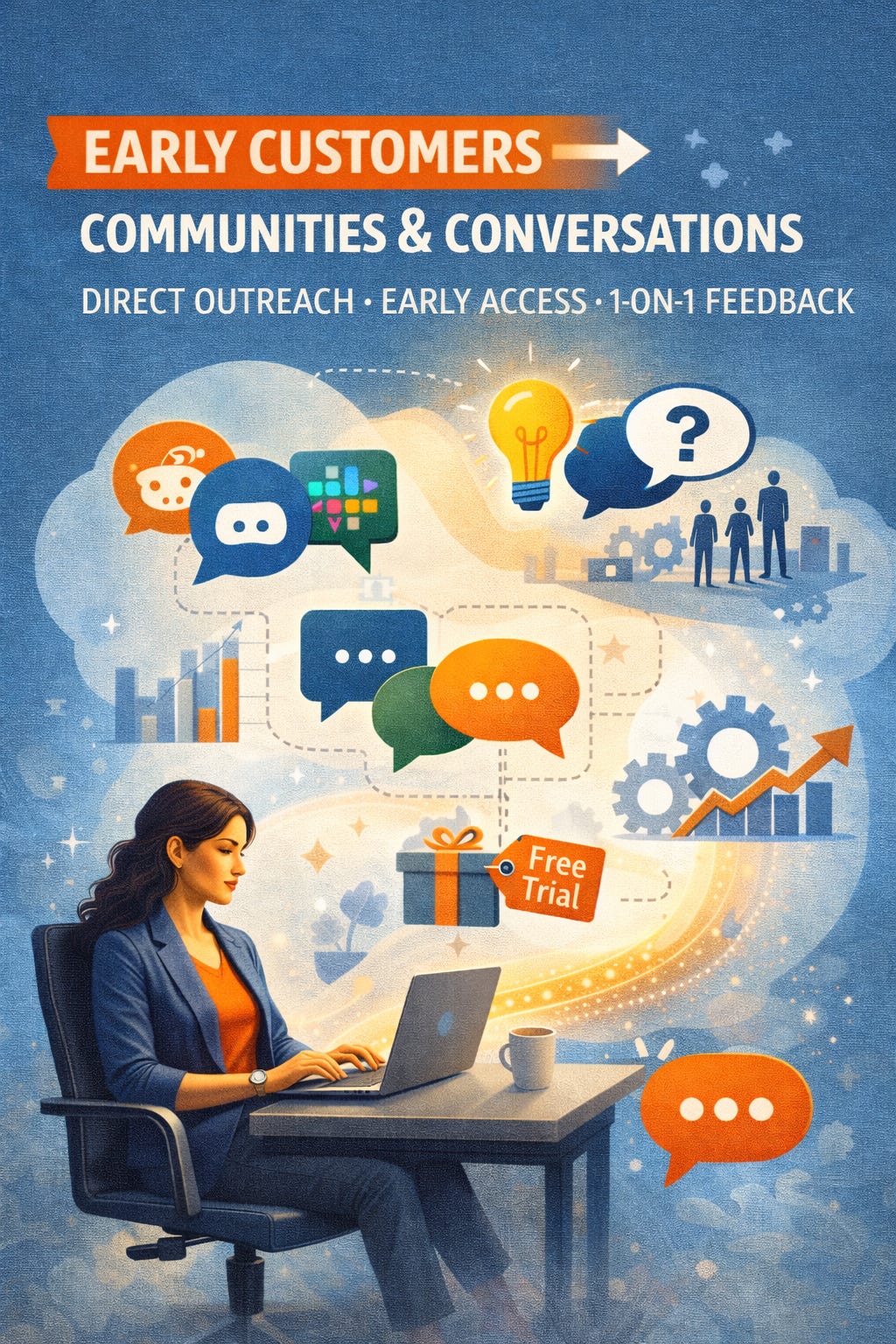
• communities
• direct conversations
• manual outreach
• helping people where the problem already exists
After reading dozens of founder experiences, the early playbook becomes surprisingly clear.
Why Most SaaS Products Fail Without Leads
Failed to render LaTeX expression — no expression found
1. Your First Customers Usually Come From Communities
Many founders reported the same thing:
Their first users came from places where their target users were already talking.
Examples included:
- Slack communities
- Discord servers
- niche forums
- Indie Hackers
- Twitter conversations
Why Most SaaS Products Fail Without Leads
One micro-SaaS founder explained it like this:
“I spent three weeks just answering questions in Slack communities and Discord servers. No pitching. Just helping. Eventually people started asking about the tool I was building.”
That approach brought them 15 early users, with 8 converting to paid.
Why communities work:
- people already discuss the problem there
- trust builds naturally
- feedback comes quickly
Instead of trying to attract attention, you’re joining conversations that already exist.
2. Help First Don’t Pitch
A common mistake founders make is posting something like:
“Hey, I’m building a tool for X. What do you think?”
Most people ignore those posts.
Instead, the founders who succeeded asked problem-focused questions.
Example:
Instead of:
“Would you use an app that does X?”
Try:
“What’s the most frustrating part of doing X right now?”
People respond to questions about their real frustrations, not hypothetical products.
Those answers reveal:
- real workflows
- real pain points
- real opportunities
That’s where product ideas and early users come from.
3. The Real Early Funnel: Comment → Conversation → Customer
The founders who found early traction followed a similar process.
Step 1
Write helpful posts or comments in communities.
Step 2
Engage with people who reply.
Step 3
Start conversations with the most engaged users.
Step 4
Offer early access or a free trial.
Example message that worked:
“Hey, I’m building something to solve this exact problem. Would you be open to trying it for free for a couple weeks and giving honest feedback?”
Early adopters often say yes because they feel involved in shaping the product.
This simple flow often looks like:
Comment → DM → Call → First customer
4. Cold Outreach Can Work — If It’s Targeted
Some founders also got early customers through manual outreach.
One example:
A founder building an AI marketing tool scraped LinkedIn for people with titles like:
- digital marketing manager
- agency founder
- growth marketer
They sent 50–80 personalized messages per day, offering a free trial.
Results:
• about 15–20% replied
• 8 users converted to paid
Cold outreach works best when:
- the target audience is very specific
- the message is personalized
- the problem is obvious
Why Most SaaS Products Fail Without Leads
But many founders reported that community-based users converted much better because trust already existed.
5. Talk to Every Early User Personally
Another pattern appeared repeatedly.
Founders who found traction talked to almost every early user directly.
This included:
- quick calls
- Slack conversations
- Loom videos
- DM discussions
Why this matters:
Early SaaS products improve fastest through direct feedback.
One founder described their process like this:
“For the first 4–6 weeks I talked to almost every user one-on-one. That’s how we figured out what features actually mattered.”
These conversations helped:
- improve the product
- clarify positioning
- convert beta users into paying customers
6. Don’t Overbuild — Build Around Real Problems
Several founders described the same realization.
They found complaints online like:
“I hate doing this task manually.”
Then they built a quick solution around that problem.
Instead of guessing what users might want, they started with existing frustrations.
One founder explained:
“I literally read complaints in forums and built small fixes around them.”
That approach reduced risk because the demand was already visible.
7. Product Hunt and Launches Usually Come Later
Many founders assume Product Hunt will bring their first users.
In reality, most founders said their early traction came before launching anywhere publicly.
Product Hunt helped later, once they had:
- real users
- testimonials
- a clearer product
Early growth often looks much more manual.
8. Early Growth Looks More Like Conversations Than Marketing
One surprising insight from founder experiences:
The early stage doesn’t feel like marketing at all.
It feels like:
- answering questions
- joining discussions
- talking to users
- solving small problems
One founder summarized it perfectly:
“Early traction looks less like marketing and more like joining conversations where the pain already exists.”
The Real Pattern Behind Early SaaS Growth
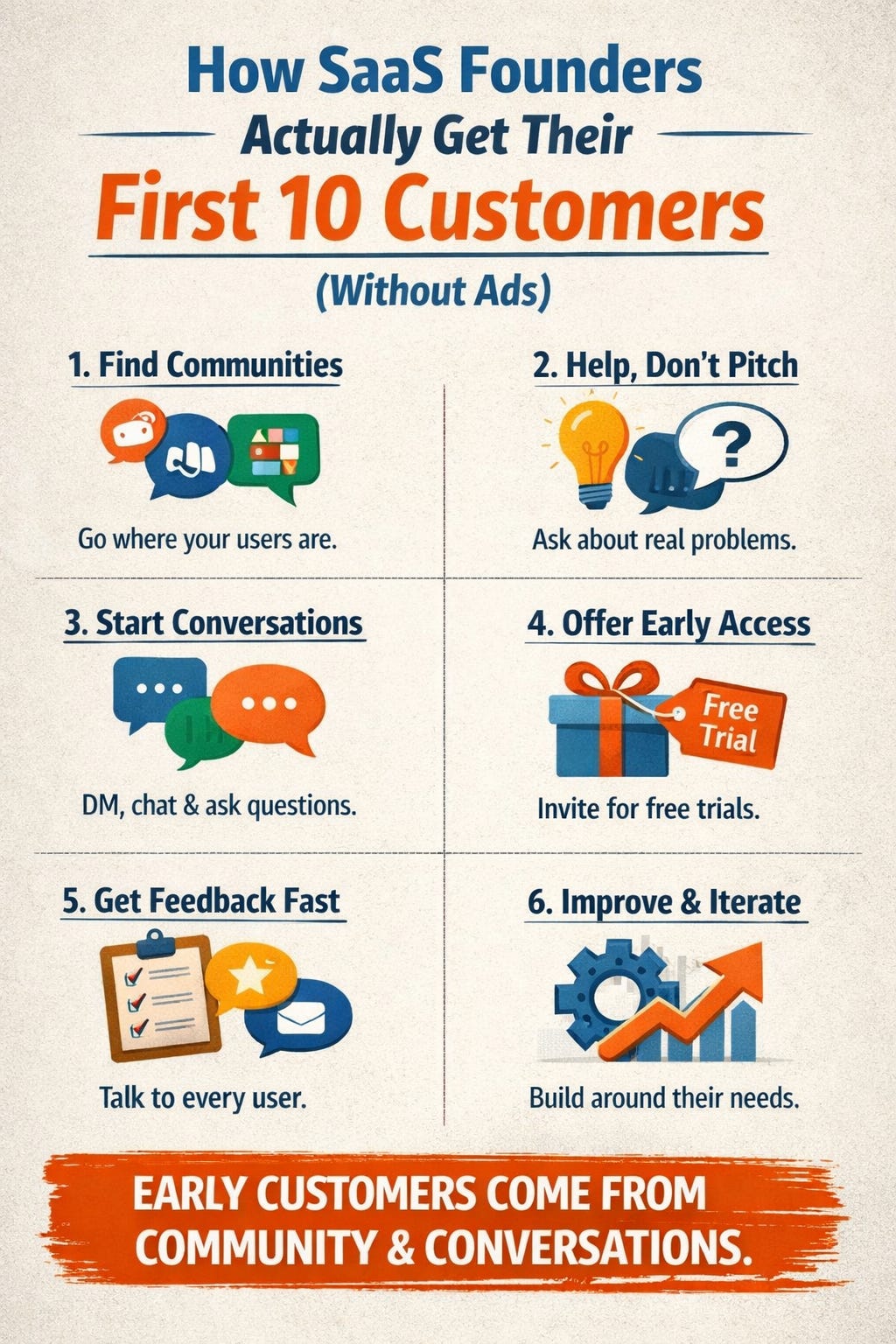
Looking at many early-stage founders, the playbook looks like this:
- Find places where your users already talk
- Help people solve problems publicly
- Start conversations with engaged users
- Offer early access or trials
- Improve the product through direct feedback
Your first customers rarely come from clever growth tactics.
They come from being useful in the right places.
Final Thought
Many founders spend months building a product and then start thinking about marketing.
But the best early strategy is simpler:
Start conversations before you try to scale.
Find people with the problem.
Help them.
Listen carefully.
Build around what they actually need.
That’s how the first customers appear.