Scaling SEO Across 500K+ Pages for One of the Middle East’s Largest FMCG E-commerce Platforms
One of the Middle East’s largest FMCG e-commerce platforms needed an enterprise SEO framework capable of managing more than 500,000 URLs, resolving large-scale indexation problems, and improving visibility across product, category, brand, and editorial content.
The Outcome
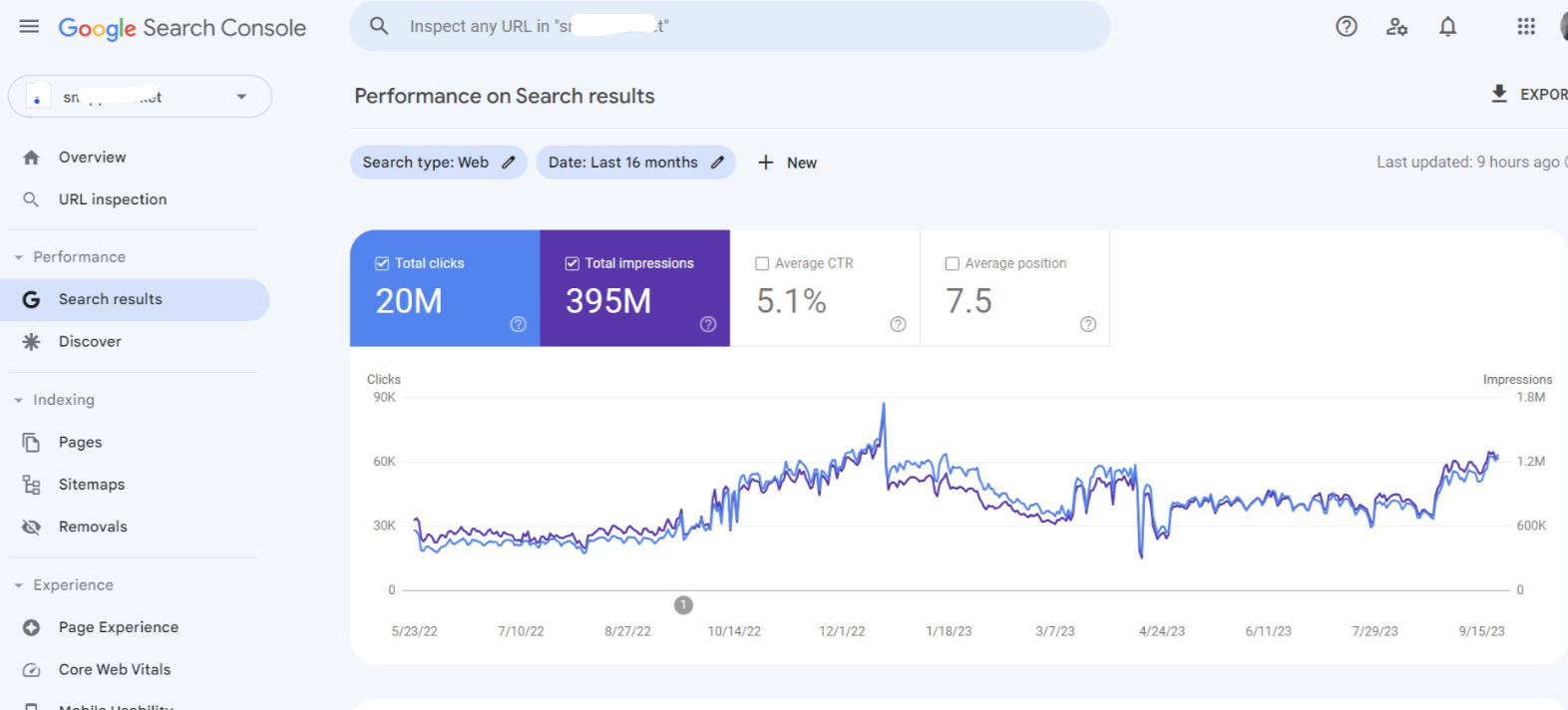
During the measured 16-month period, the platform generated 20 million organic clicks and 395 million search impressions, with an average CTR of 5.1% and an average organic position of 7.5.
The Challenge
Enterprise e-commerce SEO requires more than optimizing individual pages. With over half a million URLs, small technical or architectural problems can affect thousands of products and prevent search engines from discovering important commercial content.
A significant challenge was the platform’s reliance on client-side rendering. Important content and product information depended heavily on JavaScript execution, making discovery and indexation less reliable at scale.
- More than 500,000 product, category, brand, and content URLs.
- Indexation limitations associated with client-side rendering.
- Important product content not consistently available in the initial HTML.
- Complex relationships between brands, products, categories, and user needs.
- A need to target transactional, navigational, and informational intent.
- Limited topical depth outside the commercial areas of the website.
- Difficulty helping Google discover and prioritize high-value pages.
Our Enterprise SEO Strategy
CSR to SSR
Improved server-side availability of critical product and category content to support discovery and indexation.
Search Intent
Targeted transactional, navigational, and informational queries across the complete customer journey.
Topical Authority
Built a structured relationship between the magazine, brands, categories, products, and customer needs.
1. Enterprise Technical SEO Audit
We evaluated how Google crawled, rendered, discovered, and indexed content across the platform’s extensive URL inventory. The strategy focused on identifying patterns that could affect thousands of pages rather than treating each URL as an isolated problem.
- Analyzed product, category, brand, search, and editorial templates.
- Reviewed how critical content appeared before and after JavaScript rendering.
- Identified patterns behind discovered, crawled, and non-indexed URLs.
- Prioritized fixes according to page value, scale, and commercial impact.
- Improved consistency across metadata, canonicals, headings, and page templates.
- Created technical requirements that could be implemented across thousands of URLs.
2. Resolving CSR-Related Indexation Problems
The original client-side rendering architecture required Google to download and execute JavaScript before it could access important page content. At enterprise scale, this added unnecessary rendering dependencies and made product-page discovery less efficient.
- Compared initial HTML with fully rendered page content.
- Identified SEO elements that were dependent on client-side JavaScript.
- Prioritized product and category templates for rendering improvements.
- Ensured important content was available without waiting for browser execution.
- Reduced reliance on Google’s secondary rendering process.
- Improved the discoverability of high-value commercial pages.
3. Migration Toward Server-Side Rendering
We supported the migration from a heavily client-side rendered experience toward server-side rendering. This allowed search engines to receive meaningful page content directly in the initial server response.
- Server-rendered product names, descriptions, prices, and key attributes.
- Made metadata, canonicals, and primary headings available in the initial HTML.
- Improved the stability of structured data implementation.
- Maintained interactive functionality through client-side hydration.
- Created SEO QA requirements for template releases and migration phases.
- Monitored indexation and organic visibility during implementation.
Why SSR Mattered at This Scale
On a website with more than 500,000 pages, even a small rendering inefficiency can affect a substantial number of products. Delivering meaningful content in the initial HTML made it easier for Google to discover, understand, and evaluate commercial pages without depending entirely on JavaScript rendering.
4. Transactional Keyword Strategy
Product and category pages were aligned with high-intent searches from users who were actively looking to find, compare, or purchase specific products.
- Mapped transactional queries to the most relevant product or category URL.
- Aligned product naming with real customer search behavior.
- Optimized category pages for broader commercial terms.
- Improved titles, headings, descriptions, and internal anchor text.
- Reduced overlap between similar commercial pages.
- Connected supporting editorial content to priority transactional pages.
5. Navigational and Brand Search Optimization
The platform carried a large number of popular FMCG brands. We developed a navigational keyword strategy to improve visibility when customers searched for specific brands, product lines, and brand-category combinations.
- Created clearer relationships between brands, categories, and products.
- Optimized brand landing pages around navigational search behavior.
- Improved internal linking from brand pages to relevant product collections.
- Targeted brand-plus-product and brand-plus-category queries.
- Improved entity consistency across page templates.
- Reduced ambiguity between similarly named products and collections.
6. Building a Full Editorial Magazine
To complement commercial search visibility, we developed a complete magazine strategy designed to cover informational questions throughout the customer journey.
- Created topic clusters around products, ingredients, uses, comparisons, and lifestyles.
- Answered informational queries before users reached the purchase stage.
- Developed guides, comparisons, how-to content, and product explainers.
- Connected magazine articles to relevant products, categories, and brands.
- Used informational content to strengthen authority around commercial entities.
- Expanded organic visibility beyond product-focused searches.
7. Topical Authority and Entity Architecture
The topical strategy connected the platform’s large product inventory with the broader entities customers search for, including product categories, brands, ingredients, benefits, occasions, and everyday consumer needs.
- Organized topics into semantic pillars and supporting clusters.
- Mapped content entities to relevant commercial entities.
- Built relationships between magazine articles and product inventory.
- Improved contextual internal linking across the website.
- Established clearer topical ownership for priority FMCG categories.
- Created a scalable content model for future expansion.
8. Internal Linking at Enterprise Scale
Internal linking was used to distribute authority and guide search engines from high-visibility pages toward priority brands, categories, products, and newly published magazine content.
- Connected informational articles to relevant commercial destinations.
- Linked brand pages to their key product and category collections.
- Improved contextual links between related products and use cases.
- Used descriptive anchor text aligned with user intent.
- Reduced the depth required to discover important pages.
- Created reusable linking logic suitable for a 500K-page platform.
Search Performance
| Metric | Recorded Performance | Context |
|---|---|---|
| Organic Clicks | 20 Million | Measured over 16 months |
| Search Impressions | 395 Million | Google Search visibility |
| Average CTR | 5.1% | Across the measured search footprint |
| Average Position | 7.5 | First-page average visibility |
| Website Scale | 500K+ URLs | Product, category, brand and editorial pages |
| Rendering Strategy | CSR toward SSR | Improved content discovery and indexation |
Business Impact
- Supported organic performance across more than 500,000 URLs.
- Improved the technical accessibility of important product content.
- Reduced dependence on JavaScript rendering for SEO-critical information.
- Built visibility across transactional, navigational, and informational searches.
- Created stronger topical relationships between editorial and commercial content.
- Established an enterprise SEO framework that could scale with the product inventory.
- Generated 20 million clicks from 395 million impressions during the measured period.
Conclusion
By combining enterprise technical SEO, CSR-to-SSR migration, indexation improvements, search-intent mapping, topical authority, and a full editorial magazine strategy, we created a scalable organic growth framework for one of the region’s largest FMCG e-commerce platforms.
The campaign helped Google discover and understand a complex inventory of more than 500,000 pages while establishing visibility across the complete search journey—from informational discovery to brand navigation and transactional product searches.
Need an Enterprise SEO Strategy That Scales?
Build a technical and content architecture that helps search engines discover, understand, and rank even the largest e-commerce websites.